Bjorn’s Path to ISC2 (CC): From Service Delivery to Security Confidence
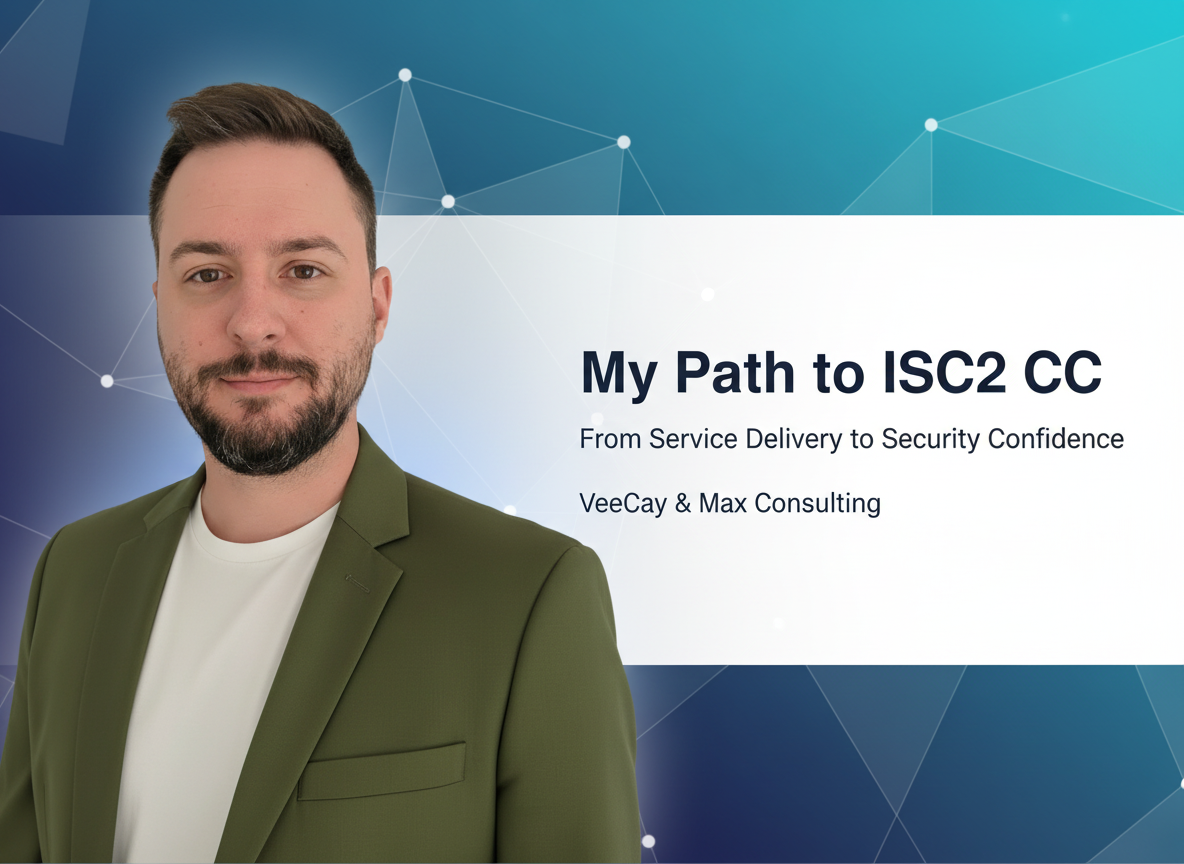
If you know me, you know I’m obsessed with two things: clarity and getting things done. That’s “The Bjorn Difference” in a nutshell—speed, structure, and measurable outcomes.
So when I decided to formalize my security baseline, I didn’t want a certification that was “nice to have.” I wanted something that:
· Proves I understand the security fundamentals every modern organization needs
· Connects naturally to governance, risk, and compliance (GRC)
· Supports the reality of my day-to-day work in IT Service Delivery and PMO
That’s exactly why I targeted the ISC2 Certified in Cybersecurity (CC): it’s globally recognized, entry-level by design, and it validates the foundation you need before you go deeper.
The bigger picture: my security learning path (and how it all connects)
My CC wasn’t a random checkbox. It was the “capstone” of a short, focused sprint that tied together:
· OCEG GRC Professional Certification (risk, governance, controls mindset)
· Microsoft Applied Skills that are directly relevant to real-world defense:
- Defending against cyberthreats with Microsoft Defender XDR
- Implementing information protection and Data Loss Prevention (DLP) using Microsoft Purview
- Securing AI Solutions in the Cloud
What I like about this combination is that it’s not theoretical. It’s the bridge between:
· How security should be governed (GRC)
· How security is actually implemented (Defender, Purview, cloud + AI security)
· How security is sustained operationally (ITSM, incident management, service delivery)
And yes—this is also the kind of mix organizations need right now: security that’s not only “secure,” but also adopted, operationalized, and measurable.
My approach to passing ISC2 CC (simple, structured, repeatable)
I’m not going to pretend I had months of free time. I approached CC the same way I approach service delivery: with a clear outcome and a simple plan.
1) I started with the outcome
The goal wasn’t “study security.” The goal was:
· Understand the core concepts well enough to explain them
· Be able to spot the right answer fast under exam pressure
· Build a baseline I can apply in projects and advisory work
2) I studied like I implement: by themes, not by chapters
Instead of memorizing definitions, I grouped concepts into practical buckets:
· Security principles: CIA triad, least privilege, defense in depth
· Risk basics: threats, vulnerabilities, likelihood vs impact
· Operational security: incidents, logging, monitoring, response
· Network & access: authentication vs authorization, segmentation
If you can explain these themes in your own words, you’re already most of the way there.
3) I connected every concept to something I’ve seen in the field
This is the cheat code for CC—especially if you come from ITSM, service delivery, or project management.
When you read about incidents, think:
· What does a good incident process look like?
· Where do organizations fail? (triage, ownership, communication)
· What does “security” change in the workflow?
When you read about access control, think:
· Who should have access, and why do they still have it 6 months later?
· How do you enforce least privilege without breaking the business?
This makes the content stick.
4) I practiced “exam thinking” (not just knowledge)
CC questions often test whether you understand:
· The best option (not just a correct one)
· The most appropriate first step
· The difference between policy, process, and technical control
So my practice focused on:
· Reading the question like a consultant: What problem are they actually describing?
· Eliminating distractors fast
· Choosing the answer that matches the principle, not the tool
What surprised me about ISC2 CC
A lot of people assume “entry-level” means “easy.” I’d describe CC as:
· Foundational, but serious
· Broad enough to test real understanding
· Focused on principles that apply across any environment (not vendor-specific)
If you’re coming from Microsoft security tooling (Defender, Purview), you’ll feel confident—but CC still forces you to think beyond product features.
Why this matters for my work (Manuport + VeeCay and Max Consulting)
In my role as IT Service Delivery & PMO Manager, these credentials strengthen the intersection I care about most:
ITSM + governance + cybersecurity
Because strong security isn’t just a security team problem. It’s a service delivery problem, a process problem, and an adoption problem.
If you can build controls but can’t operationalize them, you don’t have security—you have documentation.
If you’re considering ISC2 CC: my practical advice
If you want a simple plan that works, here’s what I’d do:
1. Commit to a date (momentum beats perfection)
2. Learn the principles first, tools second
3. Practice questions to learn the exam style
4. Translate every topic into a real-world scenario you’ve seen
5. Review weak areas, not everything
If you’re considering ISC2 CC and you want to connect it to real-world work—ITSM, governance, and security operations—that’s exactly the space I live in.
If you’d like to compare notes, or you’re an organization looking to make security controls stick (not just exist on paper), reach out via the contact page.
VeeCay and Max Blogs